
You Cannot Break Me, I Am Not Here: Knowing When to Remove Myself
When I think about what sparked my connection to existential poetry, it mainly relates to how I felt while growing up.
Relatives told me that as a baby, even before I learned to speak, when I wanted to show anger—usually when I lacked the space I needed from others—I would curl my fists, tense up, and shake so much that my whole body would “vibrate.”
When I felt like I was unheard, my family said that once I could speak, I would “storm out” of rooms and refuse to be ignored any longer.
At the very least, I was making sure my voice was heard—whether literally or metaphorically through my actions—and this was not easy.
One of my earliest memories is of being 3, on the playground at preschool, and wanting to talk to another kid my age but freezing because I didn’t really know what to say.
When my friends and family see me, they usually don’t see that version of me, if at all. But that side of me has always existed.

If you ask anyone who knew me in school, they’d say I was the first to raise my hand in class, a peer mentor, and an active participant in performing arts programs during my youth. They see me as someone not afraid to speak in front of crowds, a self-motivated activist and social justice advocate, and someone who regularly engages in challenging discussions in social justice spaces.
They would never describe me as the little girl who was too scared to speak because she didn’t know what to say.
But I've always been some version of that person.
I was the adolescent who was afraid of not being liked, the teenager with hundreds of friends. Still, I had very few close relationships, and as a young adult, I avoided conflict to spare others’ feelings while disrespecting my own in the process. All of these versions of me reflected that little girl who was too scared to talk to most people because she didn’t know how.
After a betrayal by a former friend (I won’t go into specifics), I found that the only way to express it constructively was through art. When I wrote my first existential poem, my goal was to communicate how this betrayal affected me emotionally and to highlight the flaws in the thought process of someone confident enough to betray me or anyone else. I aimed to do this without revealing that I was the person hurt or the identity of the betrayer to the poem's reader. I changed the pronouns involved and shifted the narrative from first-person to second-person.
By stepping back from the situation and imagining it happening to people outside of me, I felt I could detach from my emotions and, logically, gain a clearer sense of resolution. I felt like I could walk away from any situation without being overwhelmed by others' negativity.

After that first poem, I began using this art form to cope with the toughest days, and I discovered peace amid chaos; I found resolution rather than just the absence of tension.
We can either be another person disrupting our own peace or sit with how we feel and use it to find solutions to problems. When we choose to step away from situations and environments that require fighting... when we stop taking others' actions and thoughts personally and instead focus on our own... when we recognize what truly warrants our attention, we discover we can make sense of and navigate even the most chaotic, stormy seasons in our lives.
Even if it’s only metaphorically, when we choose to communicate instead of react, when we step back from the situation and see it for what it really is, we send ourselves and others a clear message: Only I decide my outcome, and I will do nothing but win.
If even babies have the instinct to communicate without words, we have no excuse to silence our voices—the world will do that enough.
Even when we have to communicate as someone outside the situation, we are still learning from it deep down—if we allow ourselves to.
My existential poems are my way, if nothing else, of holding space for myself and ensuring everyone else does the same for me.

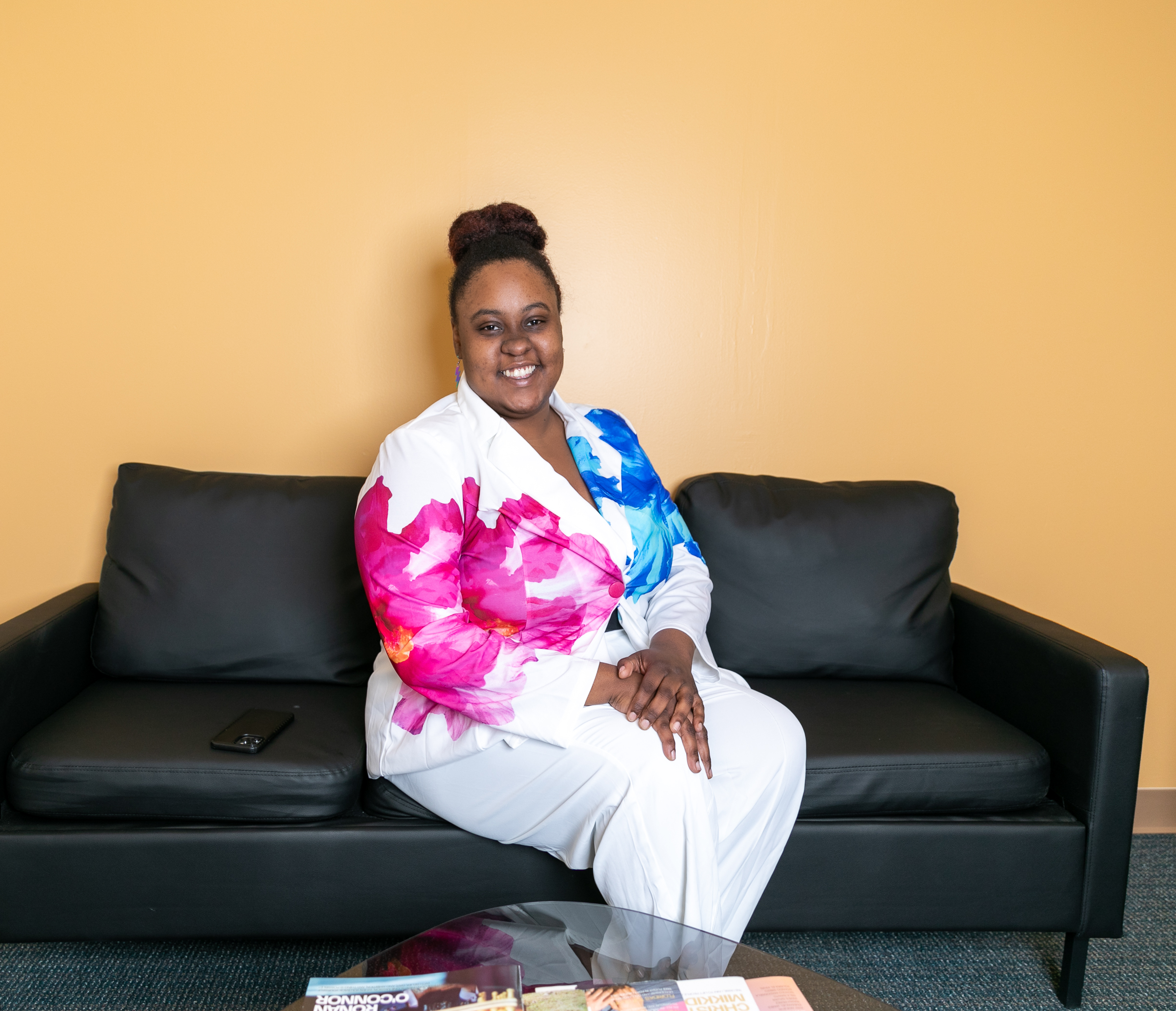
Darneisha Coleman is a 30-year-old writer hailing from the St. Louis Metropolitan area. While their main career path lies in community organizing, political activism, and advocacy, Darneisha is also a passionate artist specializing in culinary arts, performance arts, and poetry. Their goal as a poet is to reach the place within every human that perseveres.
Comments